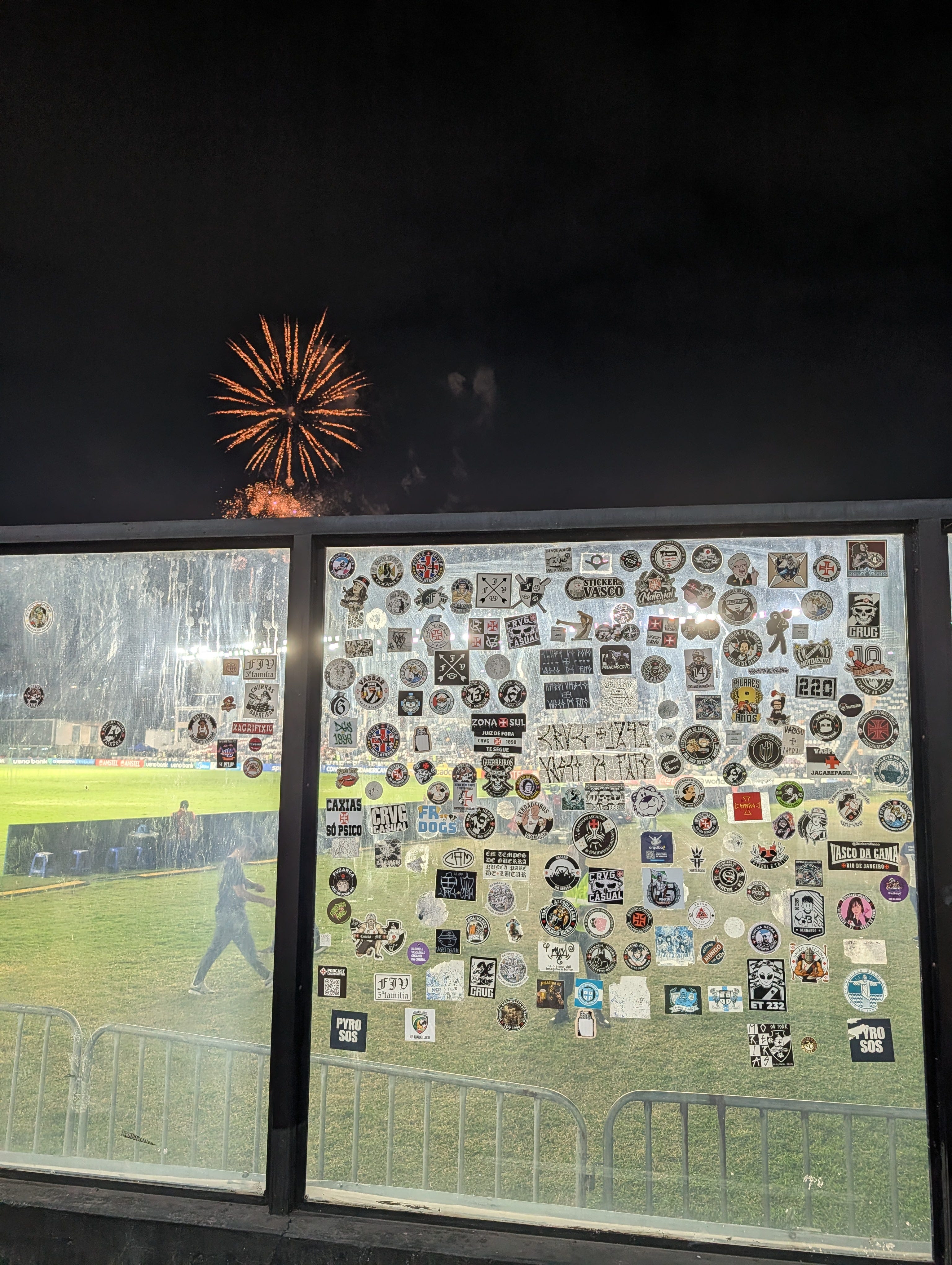
In January 2000, I sat in front of the TV watching Manchester United’s legendary treble winning side get absolutely humped by Vasco da Gama, and suddenly I had a favourite Brazilian team.
This was before social media introduced us to superstar players the instant they broke through, and there was far less football available to watch on TV, especially matches from outside of Europe. This meant I had never seen the two men who bagged the goals, Romario and Edmundo (who had five different spells at Vasco and the elite footballer nickname of ‘The Animal’) play before apart from at the 1998 World Cup, and was blown away by both the talent and skill of the Brazilian team, but also the crazy atmosphere in the stands at Maracana.
If you have a read of the ‘controversies’ section of Edmundo’s Wikipedia page, it tells you everything you need to know that “getting a chimpanzee called Pedrinho drunk on beer and whiskey” isn’t even close to the biggest scandal during his career.
While Edmundo is far from being a great role model, Vasco as a club certainly is.
Vasco is said to have the most diverse fanbase in Brazilian football, and this definitely felt true from my visit to the stadium earlier this year. In terms of the shirts you would see walking around Rio, it’s pretty undeniable that Flamengo is the biggest in the city. However, having watched both Flamengo and Vasco play live, the first thing that comes to mind is this meme:
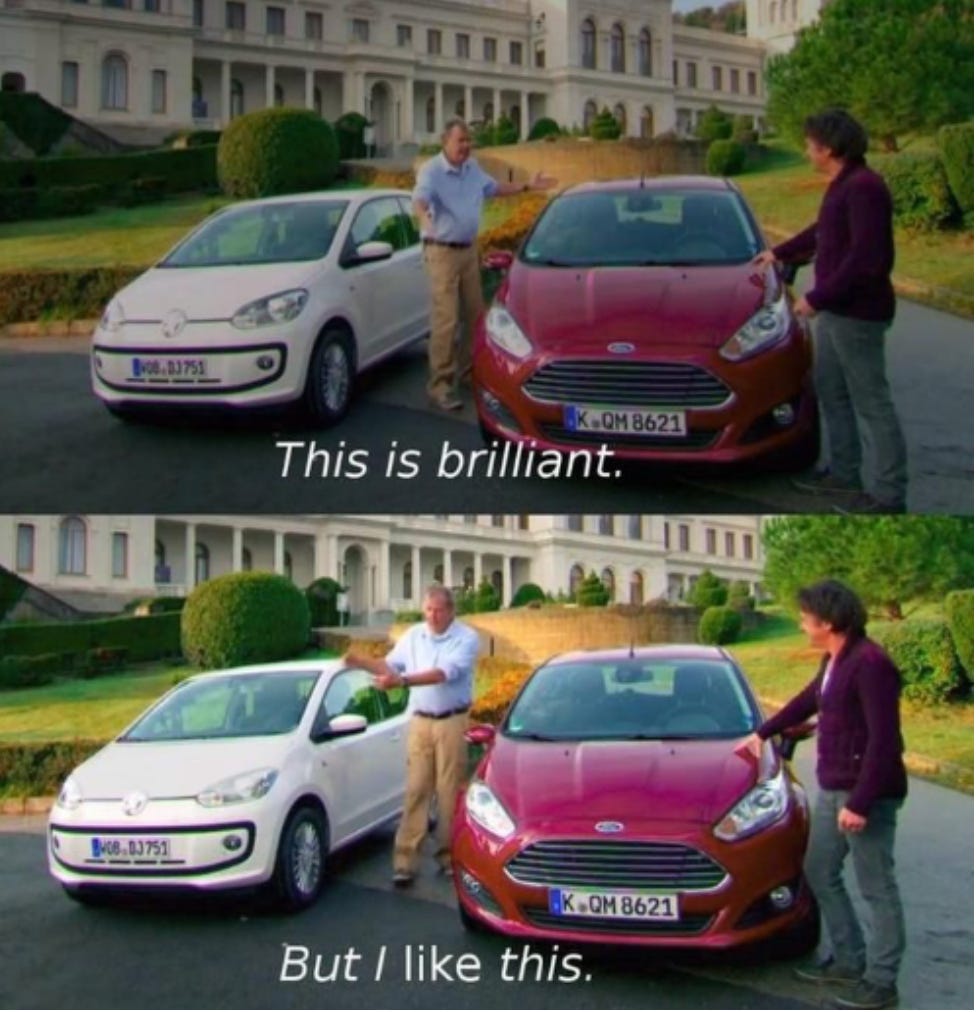
Flamengo was brilliant, but if I lived in Rio (and I would really like to do that if anyone is offering), I would be Vasco.
Football is religion in Brazil, and when you go to a match you can see people of every type of background and social class. But it wasn’t always that way, and Vasco played a monumental part in destroying the racial boundaries that dogged the sport in the early 1920’s. At this time, football was seen as a sport purely for rich white people. Vasco rejected this, and fielded a starting XI in the 1923 championship that featured six black, three white, and two mixed-race players.
These players were not just of different races from the other teams, but also different classes - featuring players who were dockworkers, taxi drivers, painters and more.
Vasco won 12 and drew 1 of their 14 games, winning the league by six points (in an era where you only got 2 points for a win), becoming champions for the very first time and humiliating the other elitist clubs. Their victory was even more impressive as it was their first season in the top flight, having won promotion from the second division the year before.
The fallout was immediate, with the other clubs demanding that Vasco remove a total of 12 players from their ranks, all of them black. While race was not the reason given for removing these players, it couldn’t have been much more obvious that this was the real reason for the other clubs’ opposition to them.
Vasco refused, with the president José Augusto Prestes stating “it would not be dignified or human to sacrifice those who have given us so many victories.” As a result, there were two Brazilian championships played in 1924, with all the other big clubs breaking away to form their own league - which Vasco refused to be part of. Instead they remained part of the original league, where they won all 16 matches - scoring 46 goals and only conceding 9.
Despite being the only of the big clubs to play in this particular league, such was the popularity of Vasco that the attendances for their matches were far greater. The refusal of Vasco to back down meant that the proposed rules that would exclude black players were dropped, and a unified league championship was once again held in 1926, with Vasco missing out on the title by a single point.
The leadership of Vasco saw Santos introduce black players in that season, and by the 1930’s a cultural revolution swept through Brazilian football, as both Flamengo and Botafogo would no longer choose players by race, but by ability.
When you think about the players such as Pele, Garrincha and later Ronaldo and Rivaldo that made Brazilian football iconic around the world, all of this can be traced back by Vasco’s refusal to back down.
There is so much more that could be said about Vasco’s history and social identity, but the main thing you need to know is they’re cool as fuck, I like them, and so should you.
When I landed in Rio, my Uber driver barely spoke a word of English, and I barely spoke a word of Portuguese. Speaking in my broken Spanish, we established that he was a Vasco supporter, and we communicated for the entire 25 minute ride by naming Vasco players such as Juninho Pernambucano, Coutinho, Bebeto, and of course, the two legends who helped topple Manchester United. An absolutely peak Uber experience, and if I could have given 6 stars, I would.
So, to the game itself, and it felt like it was going to be a good one. The opposition were Olimpia, the biggest club in Paraguay and also one of only two clubs from Paraguay I could name (for the 3 of you interested, the other one is Sportivo Luqueño, who I only know because they play in the same colours as my team and are nicknamed ‘the pig’) if asked.
Sadly it was in the Copa Sudamericana rather than the Libertadores, with Vasco currently quite some distance from their golden eras in the 20’s and 90’s. Still, the two positives of this were that the game would be played at their true spiritual home of São Januário (some bigger games such as derbies or Libertadores games are played at Maracana), and tickets would be easier to come by.
Something I didn’t know was that one of the symbols of Vasco was a pirate, something which ended up costing me a great deal in the club shop, as I bought just about everything they had which featured a pirate on it.
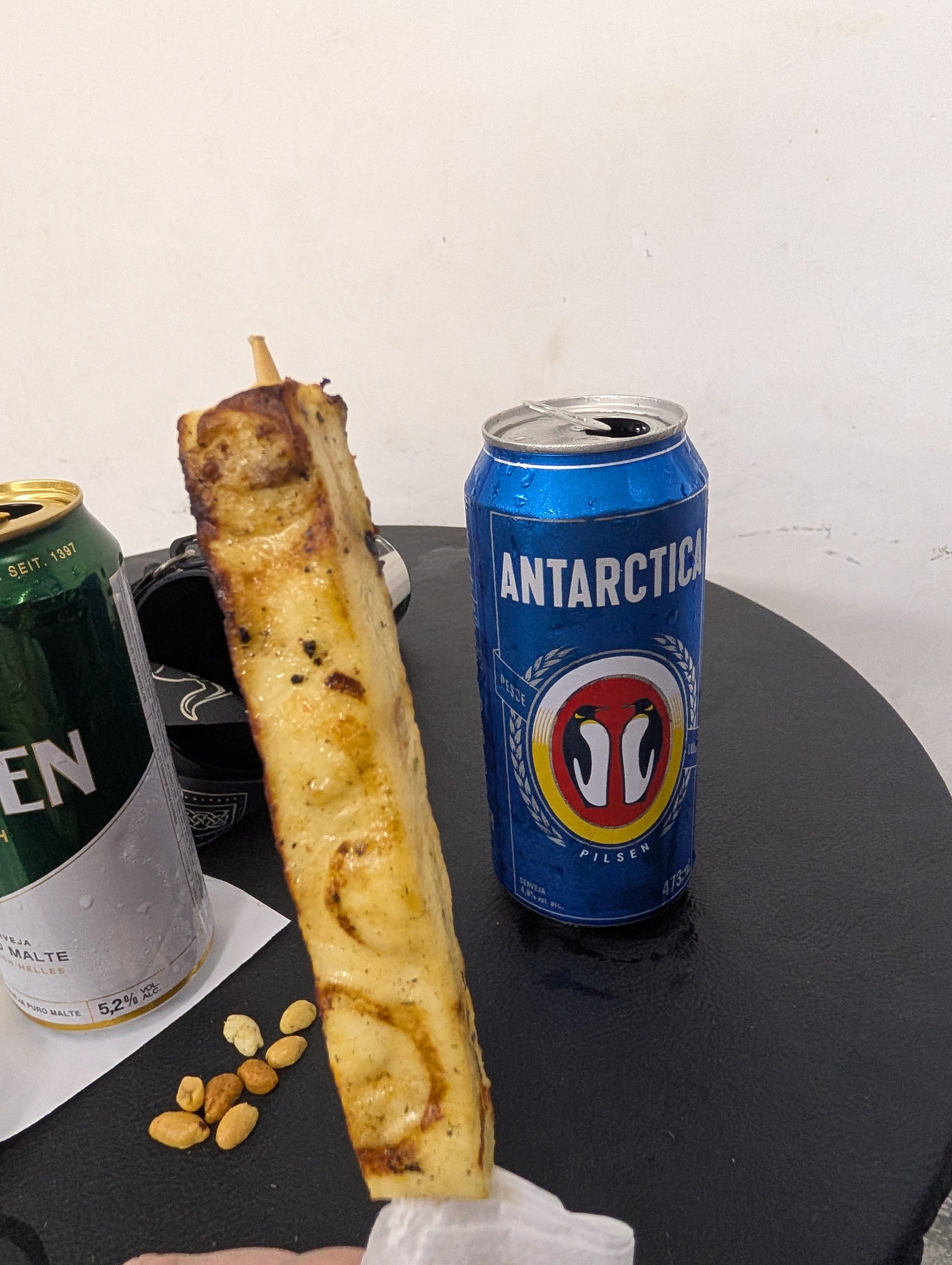
Another thing I didn’t know is that the most delicious thing you can eat in the entire world isn’t found at a Michelin Star restaurant, it’s ‘Queijo Coalho’ from a barbecue outside of a Brazilian football stadium. I ordered another one about 30 seconds after finishing my first one, and gave serious thought as to if I could make a living from running a YouTube channel reviewing fried cheese on a stick in Brazil. Being a vegetarian can be quite tricky in Brazil, but while these exist you’ll never be sad.
This wasn’t my first match in Brazil, so the facial recognition system for tickets wasn’t completely new, but it still felt very weird. For the past few years Brazil’s top clubs have replaced paper, and even digital tickets with simply looking into a camera to enter the stadium. Maybe if you do it every week it feels normal, but I hate it and it was pretty much the only aspect of Brazilian football I didn’t like.
Having successfully forfeited my right to privacy I was through security, where I made my third excellent discovery of the evening. If pirates and cheese wasn’t enough, every Vasco game featured an hour of samba before the match, with popular Brazilian songs reworked to feature Vasco related lyrics. I genuinely believe that both Brazilians and Argentinians enjoy being alive way more than we do in Europe, and this sheer happiness at existing was clear to be seen as they danced away the minutes before kick off.
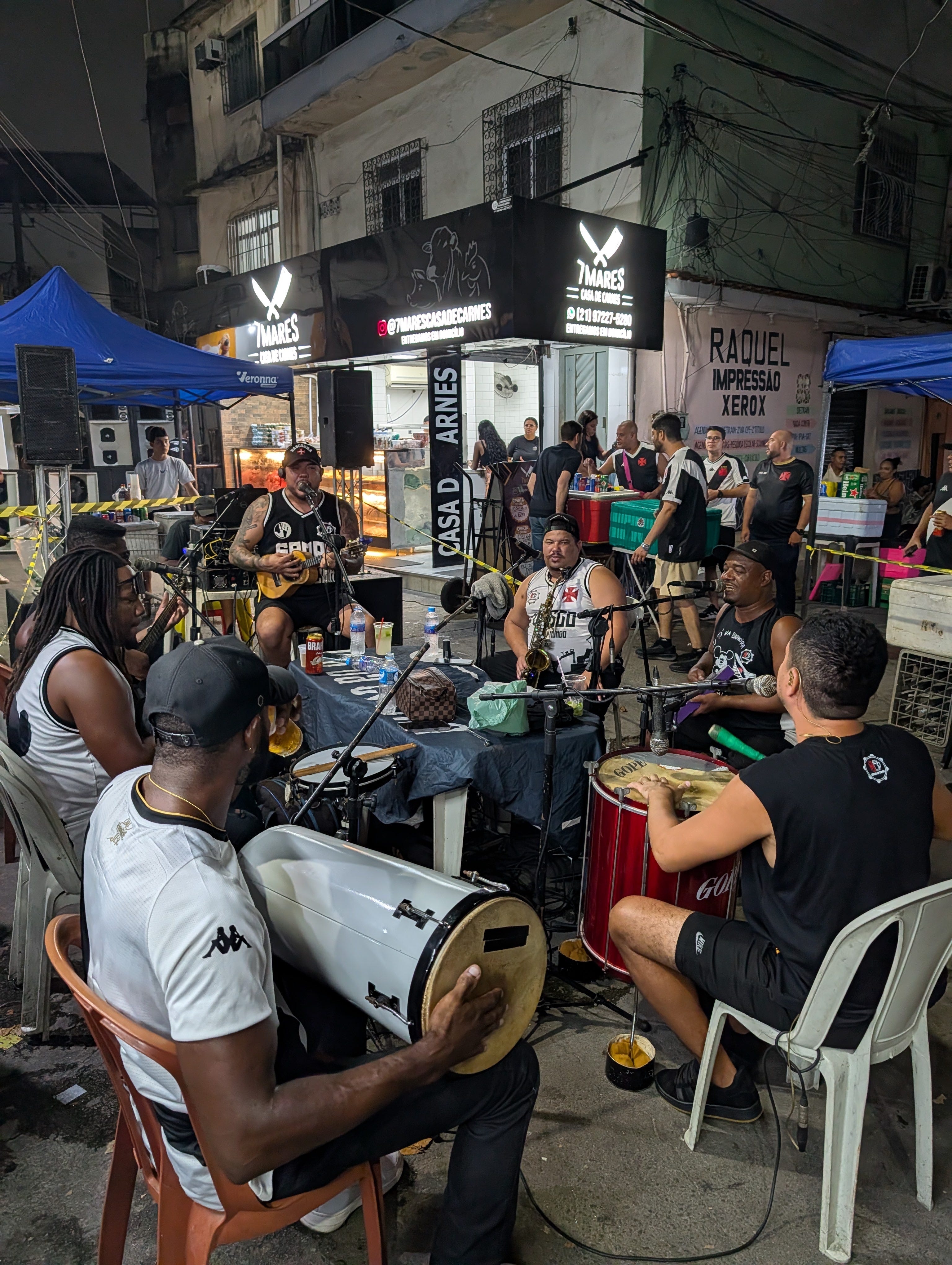
My Portuguese is way worse than my Spanish, so it wasn’t as easy to understand exactly what was being sung, but it definitely felt like there was a high level of variety in Vasco’s chants. Diego Maradona once famously said that San Lorenzo had the most creative supporters in the world. It could well be true, but Vasco won’t be far off.
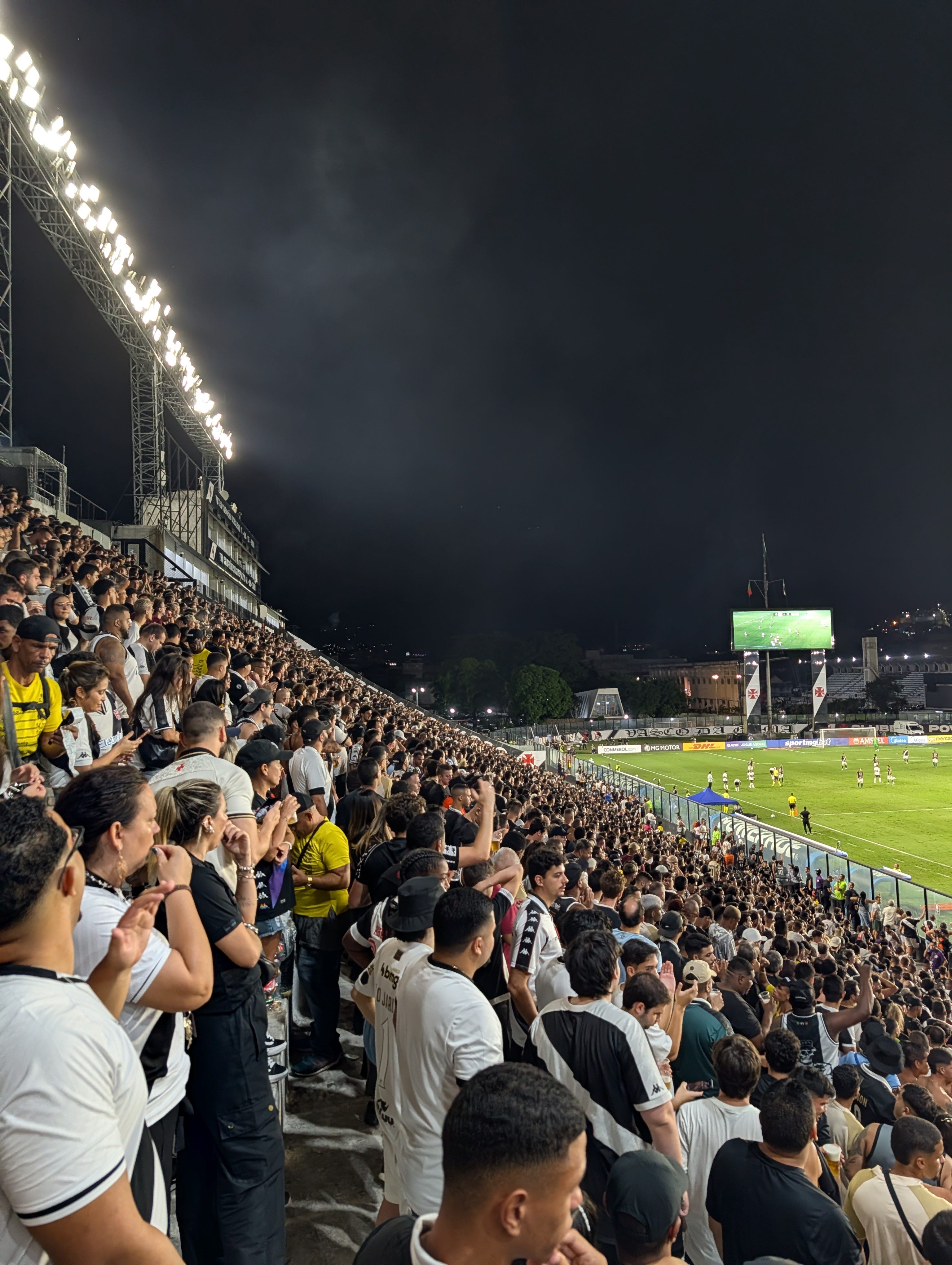
I had got chatting with a Vasco supporter who was clearly confused why a gringo was there by himself to watch the game, and he warned me that the coach was not playing the strongest team, with an ongoing relegation battle taking priority. He was concerned I might have come all this way to see Vasco get battered, but the outcome turned out to be quite the opposite.
It was as if I was transported back to 2000, when Vasco looked like the best team in the world as they banished the likes of Giggs, Stam and Keane from the tournament. After creating a wave of chances, they finally took the lead about 5 minutes before half time.
I had learned from my new friend that Vasco have a chant they sing after each goal, and all he told me was “it’s really long”. There’s no career for him in marketing, because he completely undersold it.
The chant is amazing, and there isn’t a single voice within the stadium that doesn’t join in. As with most chants, it doesn’t sound as good when translated, but here’s a rough translation anyway:
Atenção, Vascaínos! (Uh!)
Quem é o time de terra e mar? (Vasco!)
Quem é o time de terra e mar? (Vasco!)
Casaca! (Casaca!)
Casaca, casaca, casaca!
A turma é boa! É mesmo da fuzarca!
No contra-ataque! (No contra-ataque!)
No contra-ataque, contra-ataque, contra-ataque!
O Vasco é gol! O Vasco é gol, é gol, é gol!
(Or the classic ending):
Na terra, no mar!
Vasco da Gama é quem vai ganhar!
Vasco! Vasco! Vasco!
—-
Attention, Vasco fans! (Uh!)
Who is the team of land and sea? (Vasco!)
Who is the team of land and sea? (Vasco!)
Casaca! (Casaca!)
Casaca, casaca, casaca!
The team is good! It’s really a party!
On the counter-attack! (On the counter-attack!)
On the counter-attack, counter-attack, counter-attack!
On land, on sea!
Vasco da Gama is the one who will win!
Vasco! Vasco! Vasco!
“On land, on sea” refers to the fact that Vasco started as a rowing club (the most popular sport at the time) before they played football, which is also true of Botafogo and Flamengo, with only Fluminense of the big four in Rio starting out with football.
It’s truly awe-inspiring to see, and it lasts so long that you’re almost dry again from the almighty beer showers that take place after each goal. It makes sense that the supporters are proud of both their football and rowing sides, because so much beer gets hurled into the air after a goal that having to row home has got to be a serious possibility for anyone in the first few rows of the stands.
Everything about this day was great, but the moment was still to come. With the post-Vasco goal song now firmly added into the list of football traditions I would tell people you simply have to see, I was desperate to see it again. I got my wish in the 51st minute when Vasco made it 2-0, with the stadium once again erupting into flying beer and synchronised chanting. Before the song could even finish, Vasco scored again.
It was a moment of pure magic, as the crowd went crazy then started the song from the beginning without missing a beat. The beer shower was even wilder this time, as people making their way back from the bar to replace the last beer they had launched into the Rio sky were faced with the dilemma what to do with the new one. Would they try to save it from the chaos, or just launch it again?
Most went with the latter.
There were no further goals, but the comprehensive 3-0 win ended up being enough to send Vasco through to the knockout stages. My visit to the Maracana was awesome and iconic, but São Januário was better.
Hate racism, love Vasco da Gama and cheese on a stick.